
Starlink Roof, Wall, Fascia, and Ground-Pole Mounts Compared
Compare common Starlink mounting methods and learn when each option may—or may not—fit a property.
Roof mounts
Roof mounting can provide excellent sky visibility and a short path above nearby obstructions. The structure, roof material, pitch, safe access, and future roof plans must all be considered. Penetrations should be planned carefully and properly weather-sealed.
Wall and fascia mounts
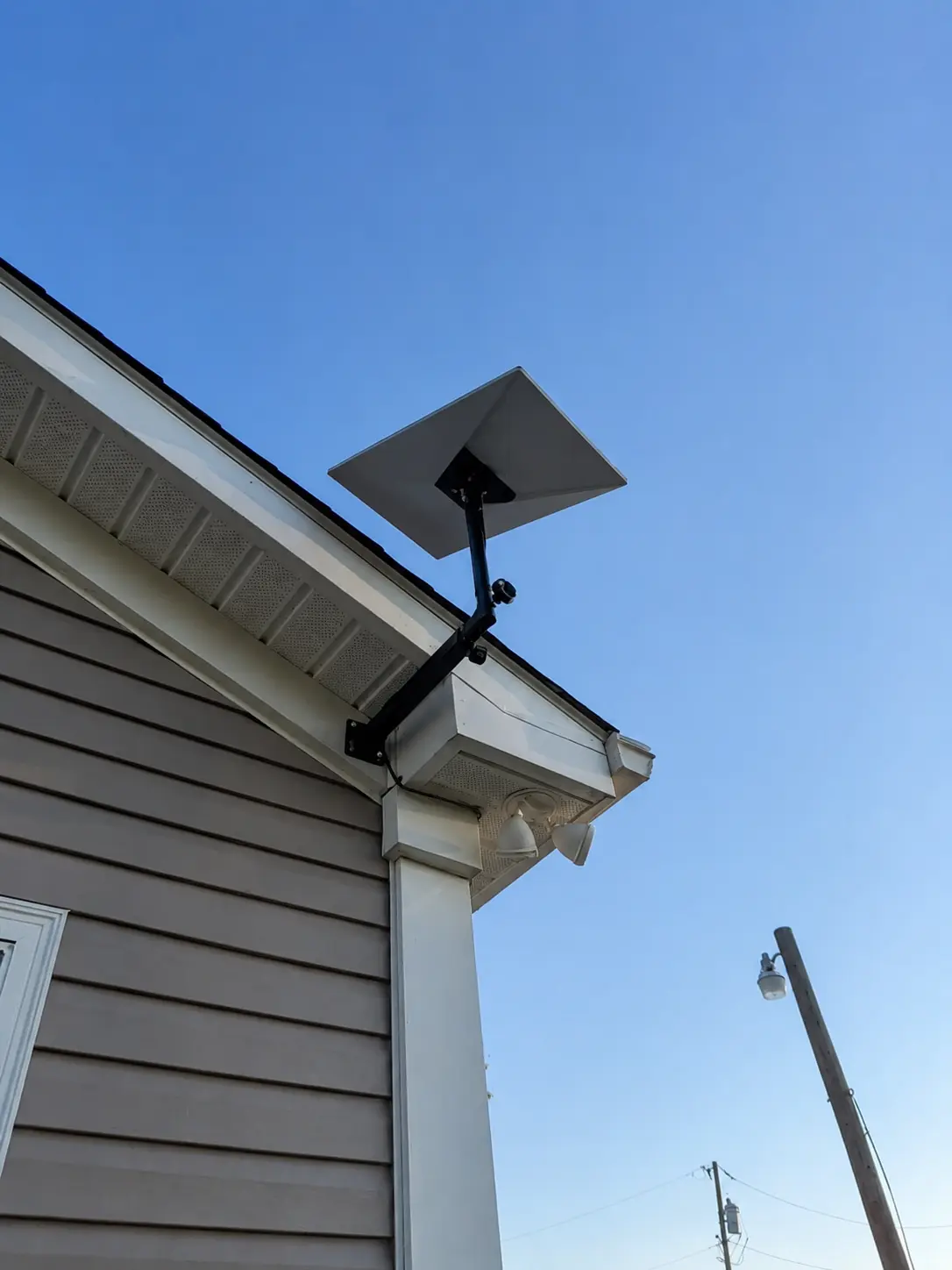
Wall or fascia placement can keep the dish off the main roof surface and may provide easier access. These options work best when the selected side of the building has a suitable sky view and the mounting material is structurally appropriate.
Ground-pole mounts
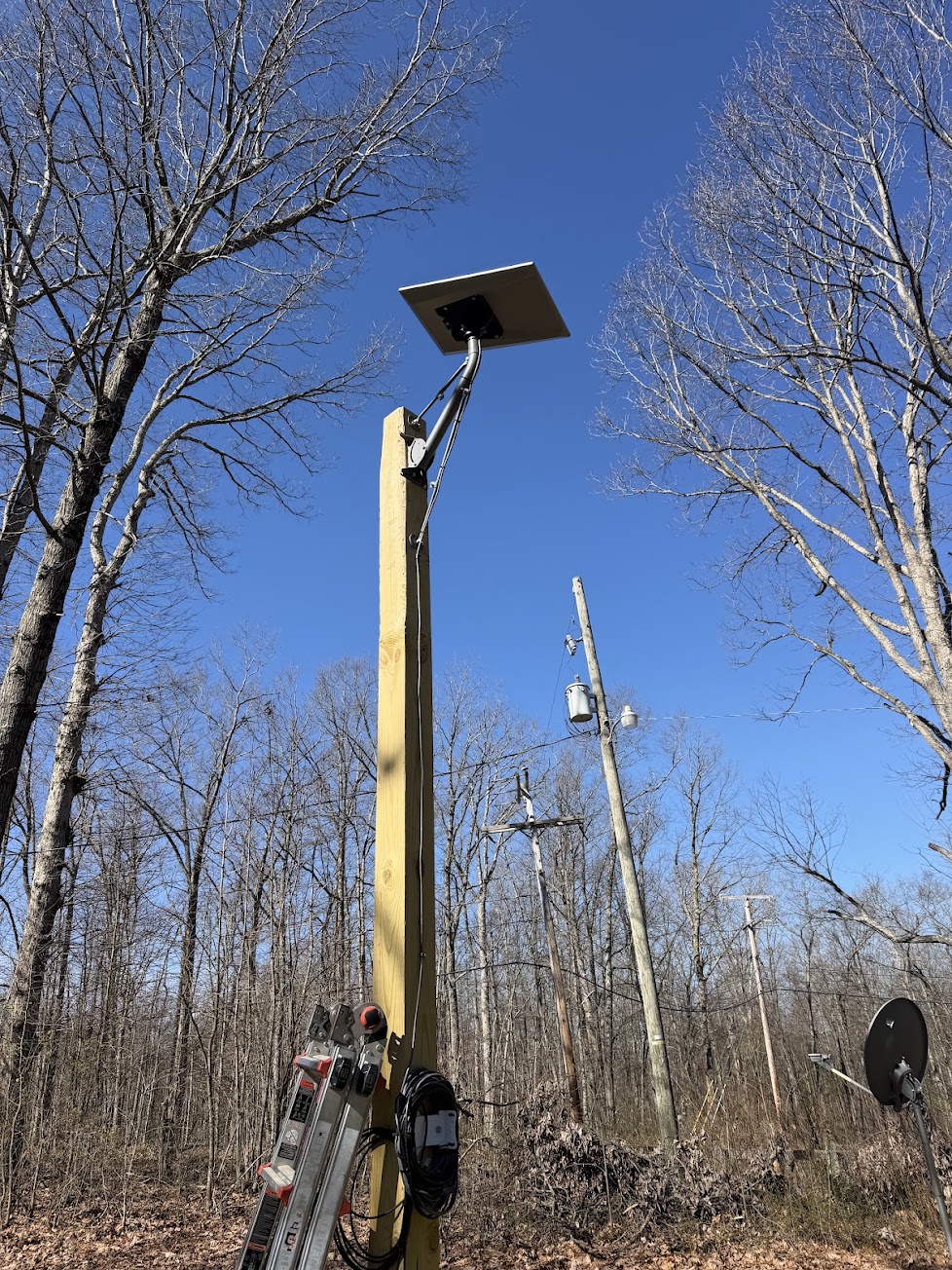
A ground pole can avoid attaching the dish to the building and may help reach a clearer area of the property. It requires a suitable location, stable installation, protection from vehicles and lawn equipment, and a practical cable route back to the building.
A freestanding pole creates a separate mounting location from the house. The route back to the router, protection from yard work, and the sky view still need planning.
Installation and photo: Mann’s Starlink Contracting · View full photo ↗Non-penetrating mounts
Weighted, non-penetrating systems may be appropriate when roof penetrations are not permitted. They require a compatible surface, adequate ballast, safe placement, and consideration of wind exposure. They are not the right answer for every roof.
This mount spans the roof peak instead of using a wall bracket. Roof suitability, ballast, and wind requirements must be checked for the selected mounting system.
Installation and photo: Mann’s Starlink Contracting · View full photo ↗Existing satellite-dish mounts
Some existing satellite mounts can be reused with a compatible pipe adapter, provided the mast is secure, correctly sized, well positioned, and still structurally sound. Old hardware should be inspected rather than assumed usable.
Choosing the right mount
The best mount is the one that combines a clear sky view, structural security, clean routing, reasonable access, and long-term practicality. Final selection should follow an on-site evaluation.
See how this works on a real property.
Mann’s Starlink Contracting is Caleb Mann’s installation business. Caleb also created StarTether to help Starlink owners understand their connection. Mann’s serves an 11-state region from Campbellsville, Kentucky; confirm your address before scheduling.
Confirm with the official source.
Check the instructions for your exact kit, accessory, and service plan before making a hardware or account decision.
Starlink Help Center ↗Suggest a correctionRelated guides
Ground-Pole Starlink Installations: Placement, Conduit, and Protection
Plan a durable ground-pole installation with clear placement, protected underground cable, and practical maintenance access.
2 MIN READ ↗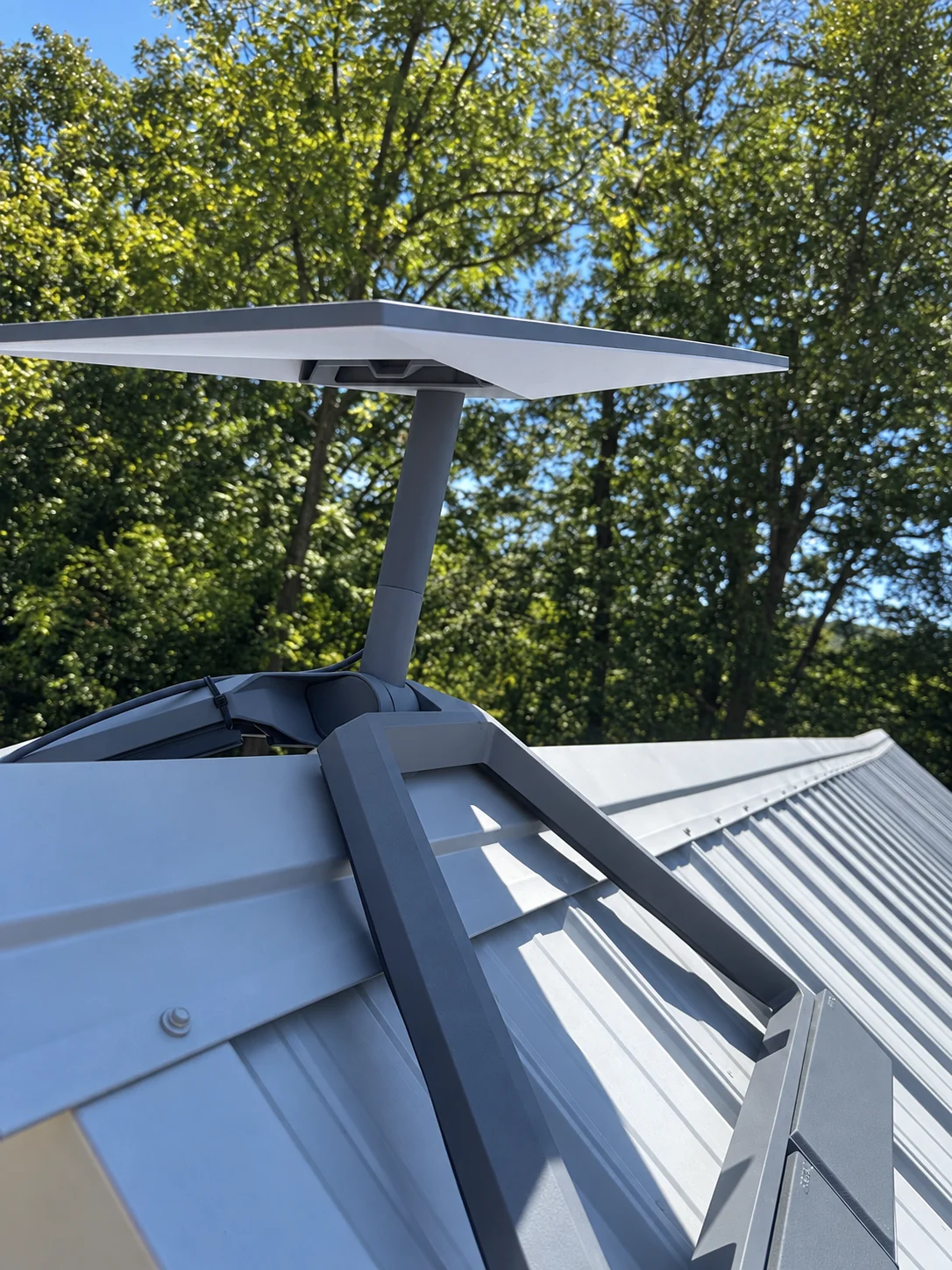
Starlink Mounting on Metal Roofs
Understand attachment, sealing, corrosion, cable protection, and non-penetrating considerations for metal-roof Starlink installations.
3 MIN READ ↗
Starlink Mounting on Mobile Homes and Manufactured Homes
Explore safe mounting and cable-routing considerations for mobile and manufactured homes without relying on thin exterior materials.
2 MIN READ ↗